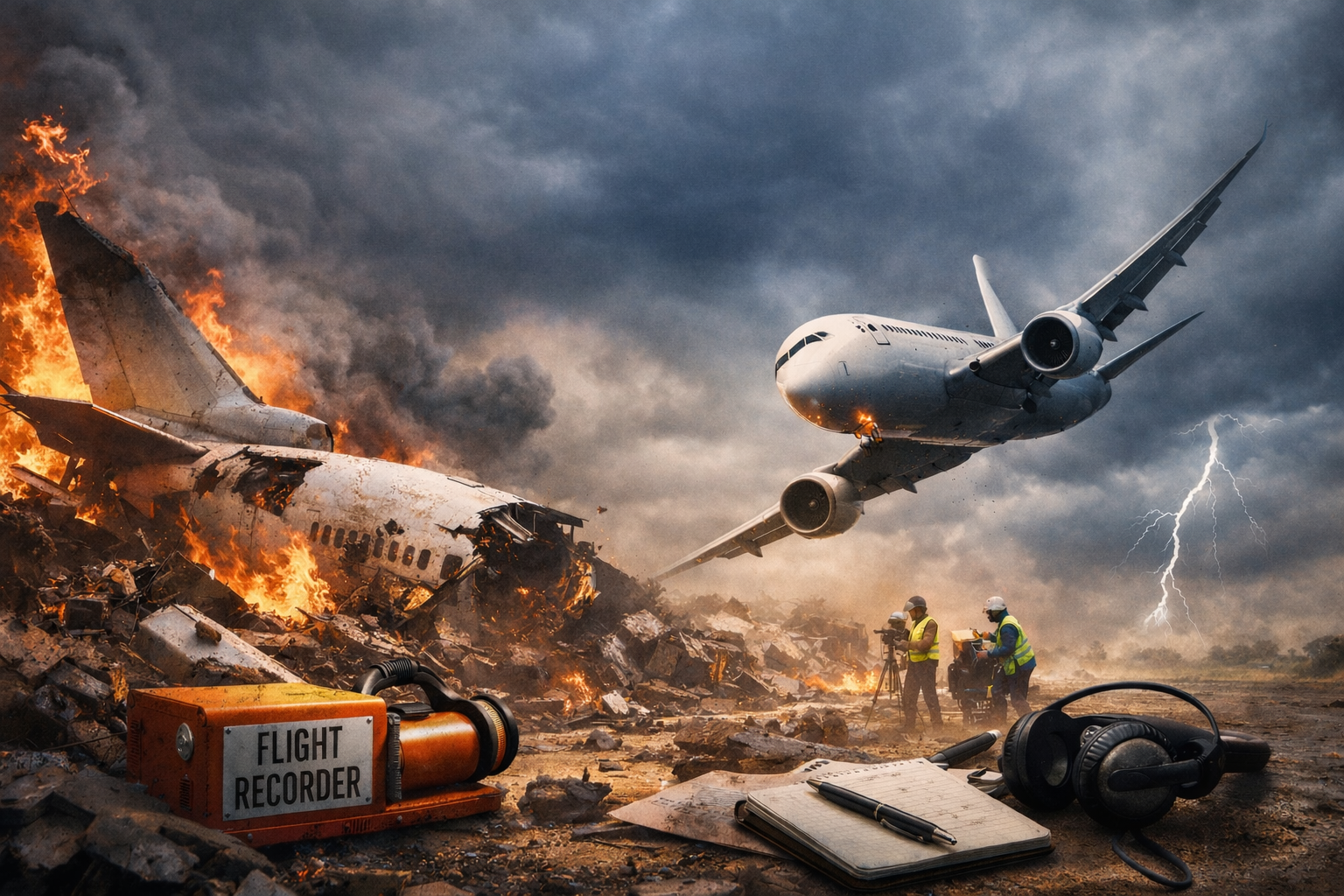
Every day, thousands of flights safely carry millions of passengers worldwide. Yet, when something goes wrong, the results can be catastrophic. Airplane crashes are rare, but their impact is devastating—not only on passengers and families, but also on the aviation industry.
Despite what many fear, flying remains one of the safest forms of travel. Most accidents are caused by pilot error, mechanical failure, or extreme weather, and survival rates are higher than people expect. Advances in technology, rigorous training, and emergency protocols have made it possible for the majority of passengers to survive even serious incidents.
History remembers certain crashes for the lessons they brought. The Tenerife disaster in 1977 led to stricter communication rules for air traffic controllers. Captain Chesley Sullenberger’s Hudson River landing in 2009 demonstrated the importance of pilot skill and crisis management. Even the mysterious disappearance of Malaysia Airlines Flight 370 sparked improvements in tracking systems and search coordination. Each tragedy drives innovation, from black boxes that capture critical flight data to advanced aircraft safety systems and better training for pilots.
Watching a detailed analysis of these crashes can help you understand how investigators piece together events and how safety standards evolve over time: