My name is Mark. I’m forty-two. Last Thursday, a knock at the door brought the past rushing back in a way that made my whole life feel present at once.
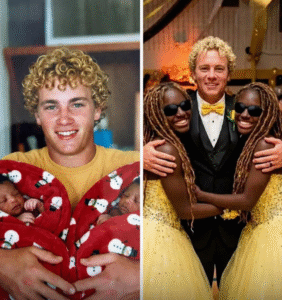
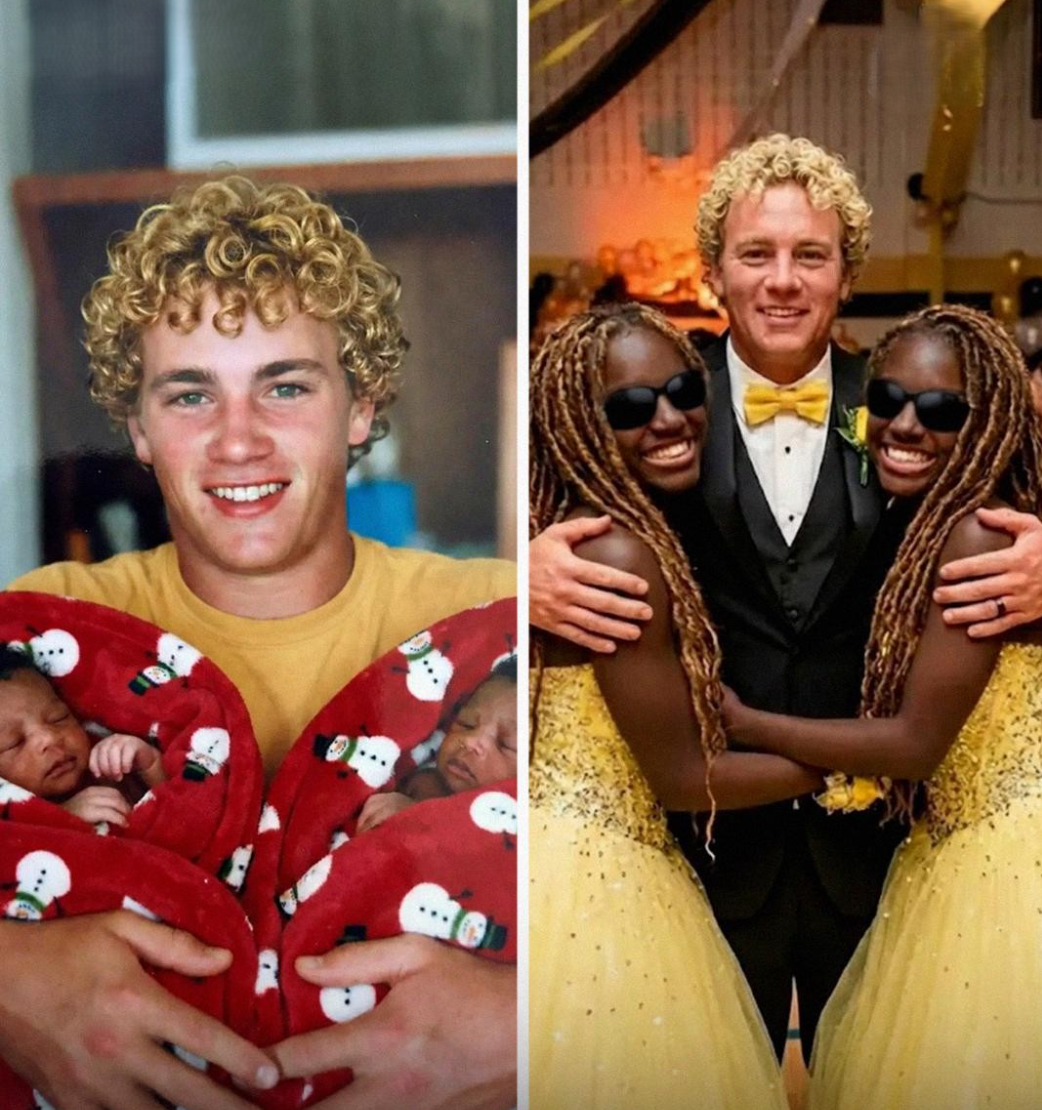
Eighteen years ago, my wife, Lauren, walked out on me and our newborn twin daughters, Emma and Clara. The girls were born blind. The doctors delivered the news carefully, like a storm warning—soft voices, folded hands, hesitant eyes.
Lauren didn’t hear “challenge.” She heard “burden.”
Three weeks after we brought the babies home, I woke up to an empty bed and a note on the kitchen counter:
“I can’t do this. I have dreams. I’m sorry.”
No number. No address. No promise to return. Just a woman choosing herself over two helpless babies.
I had no time to crumble. Life became bottles at 2 a.m., diaper changes, laundry, and learning to raise two blind children in a world built for sighted people. I learned Braille before they could even talk. I rearranged our apartment so they could move safely—padded corners, memorized pathways, furniture fixed in place. I trained myself to listen harder than ever before, because they would experience the world through sound, touch, smell, and patience.
We survived. But survival was never enough.
By age five, I introduced sewing as therapy—fine motor skills, spatial awareness, and self-confidence. It quickly became their passion. Emma could feel the texture of fabric and identify cotton, silk, satin, linen, or lace as if cataloged in her hands. Clara could “see” garments in her mind like a composer hearing music without a piano. Our living room became a workshop: piles of fabric on chairs, thread spools on windowsills, the hum of a sewing machine marking the heartbeat of our home.
We built a life from scraps, both literal and figurative.
The girls grew resilient. They mastered cane routes, made friends who saw them as whole people, laughed, argued, and dreamed. And almost never asked about their mother—not because they didn’t wonder, but because I protected them from her absence without distorting the truth: she left, and it wasn’t their fault.
Then last Thursday, the doorbell rang.
Lauren was there. Perfect hair, designer clothes, sunglasses even though it was overcast. She stepped inside like she owned the place, sneering at our modest apartment.
“You’re still the same loser,” she said. “Living in this hole? You should be building an empire.”
Emma and Clara froze, hearing everything. Blind kids miss nothing.
“Who’s there, Dad?” Clara whispered.
“It’s… your mother,” I said.
Lauren tried charm, calling the girls sweet names, pretending to have thought about them every day. But Emma’s sharp voice cut through.
“We can’t see, remember? That’s why you left.”
Clara added coolly, “We haven’t thought about you at all.”
Lauren produced designer gowns and an envelope of cash, laying it all out with meticulous precision. Then she placed a folded document on top.
“I want my daughters back,” she said. “I want to give them the life they deserve—but there’s a condition.”
Emma asked, steady but wary, “What condition?”
Lauren’s smile widened. “You get all of this, but you must choose me over your father. You have to publicly acknowledge that he failed you. That I’m the one providing your real future.”
I clenched my fists. “You’re out of your mind.”
Emma and Clara didn’t flinch.
“This is a lot,” Emma said, touching the envelope. “But we’ve never needed it. We have everything that matters.”
Clara added, “We had a father who stayed. Who taught us, protected us, and never let us feel broken.”
Together, they rejected Lauren’s offer. Emma tore open the envelope, letting the money scatter like confetti across the floor, landing on the sewing machine, the table, and Lauren’s expensive shoes.
Lauren erupted in anger, but the girls stayed resolute. “We’re not for sale,” they said.
Later, we learned the whole scene was recorded by Emma’s friend. The video went viral, captioned: “This is what real love looks like.”
The attention brought opportunity. A costume design program offered scholarships and internships—not out of pity, but because Emma and Clara’s talent was undeniable.
Yesterday, I watched them work on set—Emma adjusting a collar, Clara pinning a hemline—hands moving with confidence, skill, and pride.
At our modest apartment that night, surrounded by fabric scraps and the hum of the sewing machine, I realized what Lauren didn’t understand: love isn’t about money, performance, or appearances. It’s loyalty, patience, courage, and presence.
When she tried to buy her way back in, she learned the same truth I had long ago: there’s a difference between expensive and valuable.
And my daughters already knew exactly which one she was.